
What is effective content writing?
We write diverse types of content to share with various people every day. We want some content to be educational, some to be entertaining, some to be persuasive, and so on. But are they effective enough? that’s the million-dollar question.
Effective content writing is about understanding the true purpose of the content and ensuring that the purpose is met at the end. Effective content writing is all about effective communication. Therefore, if you can communicate clearly with your words, you have already achieved 90% of your objective.
Whether it is to sell a pickup truck or inform people about the benefits of fish oil, clear and organized content can help you accomplish those objectives more than hazy, unappetizing content ever can.
06 tips to write effective content
Tip 01: Understand the Content Readers Before Writing Content.
Imagine you’re writing content for a technical audience. You’ll need to use more specialized language and include more technical details because that’s your readers’ background. Now picture yourself writing for a general readership. Would you use the same language you used to address the technical audience? You would if you want readers to doze off while reading your content.
Before writing a single word, put yourself in your potential readers’ shoes to understand their specific needs and interests. Learn what language they use, what writing style suits them, what their favorite books are, and anything that would help you understand them better.
Takeaway: Understand the interests and needs of your target audience before writing a single word.
Tip 02: The Clarity Behind Your Words Speaks Volumes.
If your readers can’t understand what you’re saying, what use is it to be clever and creative?
Therefore, prioritize writing with precision and clarity because it is more important than being excessively and pointlessly clever. If your content is creative but disconnected, your readers will lose interest and stop reading immediately. The worst-case scenario is that they may never read anything else you write again (Ouch).
Takeaway: If your attempts to be creative only lead to confusion, opt for simplicity and clarity.
Tip 03: Use headings to make everything clean.
Imagine visiting your local town during the Christmas season, and you are peeking for your favorite donut shop. You see their enormous Donut billboard from afar, and you know how to find the shop now. That is precisely a headline in writing. Headlines aid readers in locating the content they seek by acting as the billboard of your favorite donut shop.
Let’s see what are some of the main advantages of using headings.
-
- Using them makes it easier for readers to understand the leading topics of your content.
- They provide a preview of upcoming information to pique your reader’s interest.
- Headings and subheadings can improve the SEO of your content (search engine optimization). Including relevant keywords in your headlines will make it easier for search engines to understand your content.
Takeaway: Imagine this post without the headlines. Just thinking about it gives me a headache.
Tip 04: Get to the points with bullet points.
When we present our readers with too much information, they may become overwhelmed. Bullet lists are an excellent way to prevent this because they enable us to deliver information in a structural, digestible manner.
Let me use a few bullet points to explain the importance and uses of bullet points in effective writing. Poetic, wouldn’t you say?
-
- Bullet points are helpful when creating a list of items you want your readers to remember.
- They improve your writing’s structure and organization by grouping related items together.
- Your writing will be more engaging and visually interesting since it will break up the repetitive, lengthy text blocks into easily readable and scannable points.
Takeaway: Instead of saying, “capybaras, honey badgers, dogs, and otters are my favorite animals,” making a bulleted list would make your favorite animals more readable and memorable.
Tip 05: Stimulate your readers visually.
Our brains enjoy welcoming unique information, and when that information is merely words, it is natural for us to become tired and want to doze off.
Images and videos are great ways to keep our brains engaged by presenting visually appealing new information, and we can also use Images to communicate and illustrate abstract concepts easily.
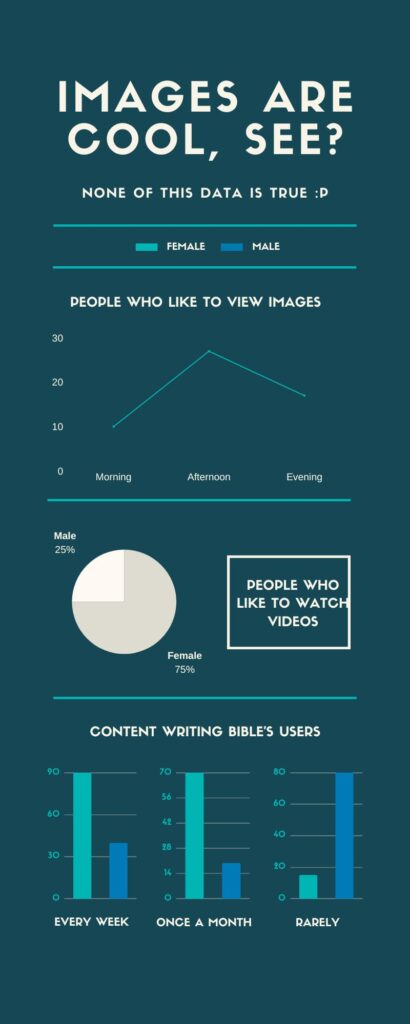
Remember that using images and videos to supplement your writing is an effective strategy. They can break up long passages of text, support your arguments, and draw readers in, but they also significantly impact the SEO of your content.
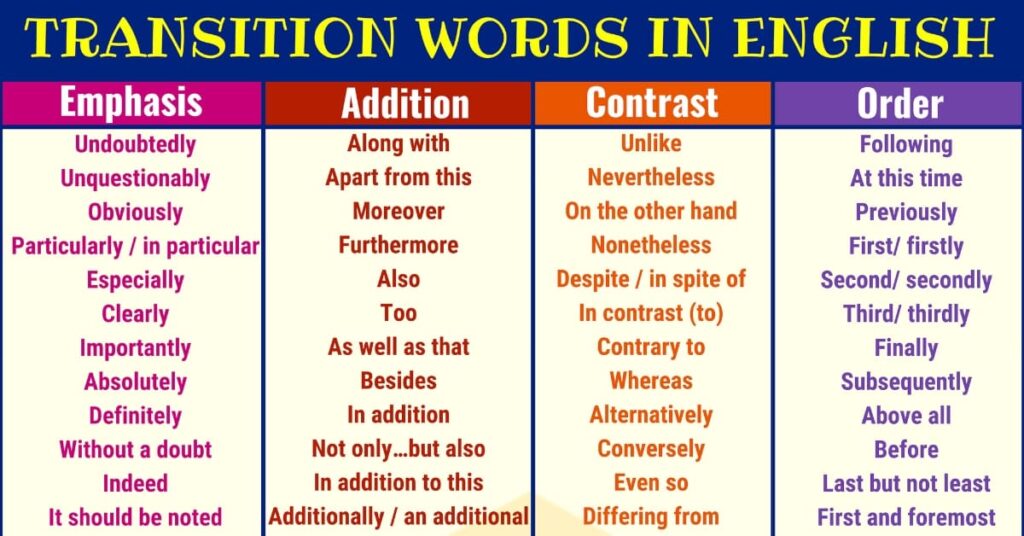
Tip 06: Maintain a steady flow with transitional phrases.
Transitional words and phrases are essential for writing because they combine ideas and support a fluid and unified flow. If your writing needs more cohesion, the points you’re trying to transmit may come across as fragmented, making it difficult for readers to follow.
Transitional words and phrases help us connect ideas more smoothly and enhance the logic of our writing by demonstrating the relationship between diverse ideas. Therefore, feel free to sprinkle in a transitional phrase here and there to boost the flow of your content.
Tip 07: Content Writing is all about Content Editing and Proofreading.
If the content writing gods allow me to add another word to the phrase “Content Writing,” I would gladly do so by adding the word “Editing” into it. Why? Because the content writing process is only finalized if it is edited and proofread.
Editing is crucial in content writing because it ensures that it is understandable able and concise. Proofreading is all about making sure your content is grammatically correct and error-free.
The key to becoming an effective content writer is knowing what to edit and keep in the final output. For example, this blog post currently has around 1200 words, but it had about 1800 words when I finished the first draft. I had to cut out repetitive sentences and sentiments that were essentially useless.
Takeaway: After you are done with writing, it’s time to edit and edit and edit and edit and edit and edit and edit and edit.
Conclusion
As you can see, writing high-quality content requires clarity and precision, and pursuing them will most certainly help you write content that is valuable and effective.
